Ultimate Guide to Choosing the Best Camping Sleeping Bag?
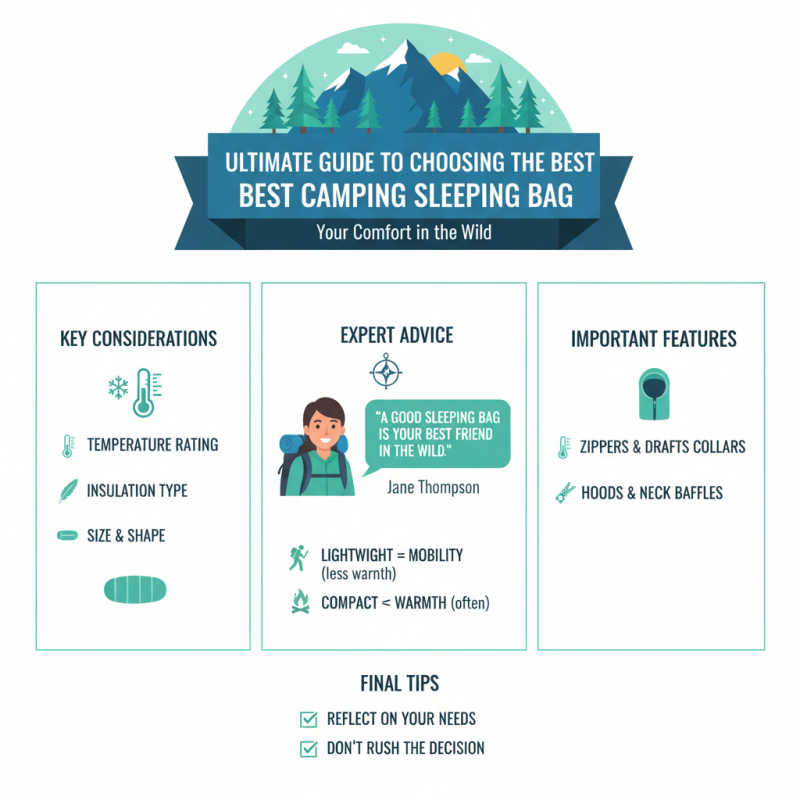
Choosing the right camping sleeping bag can make or break your outdoor experience. According to renowned outdoor expert Jane Thompson, "A good sleeping bag is your best friend in the wild." This emphasizes the importance of selecting a camping sleeping bag that meets your needs.
When planning for a camping trip, consider temperature ratings, insulation types, and sizes. A lightweight bag can enhance your mobility during hikes. However, this often comes with trade-offs in warmth. You might find that a compact bag doesn't always provide enough insulation.
Pay attention to features like zippers and hoods. Discomfort can ruin a night under the stars. Sometimes, even the best camping sleeping bag may not be ideal for your situation. Reflect on what works for you. Avoid rushing the decision; take time to explore different options.
Understanding Sleeping Bag Temperature Ratings and Their Importance
When choosing a sleeping bag, temperature ratings are crucial. These ratings indicate the lowest temperature at which the bag will keep a user warm. The most common ratings include summer, three-season, and winter. Summer bags typically handle temperatures above 32°F, while three-season bags are rated for 20°F to 32°F. Winter bags focus on extreme temperatures below 20°F.
A report by the Outdoor Industry Association reveals that improper sleeping bag selection can lead to discomfort and even hypothermia. Inadequate insulation or wrong size can compromise warmth. Many users overlook the importance of fit. A bag that’s too loose holds less heat and can make cold nights uncomfortable. Conversely, a very snug fit might restrict movement and lead to a restless sleep.
It's important to note that personal comfort levels vary. Factors like age, metabolism, and clothing can influence how one perceives temperature. The perceived temperature can differ significantly from what a sleeping bag is rated for. This discrepancy often goes unrecognized, leading to inadequate preparation. Even experienced campers can misjudge their needs.
Types of Sleeping Bags: Mummy, Rectangular, and Hybrid Models Explained
When choosing a sleeping bag, understanding the types available is essential. Mummy bags are popular for their shape. They hug the body tightly, trapping heat effectively. This design suits colder conditions well. They are lightweight and compact, making them a great choice for backpackers.
Rectangular sleeping bags provide more room. They allow for easier movement during sleep. This style is ideal for campers who value comfort over weight. However, they may not retain heat as efficiently. If you’re camping in chilly weather, consider this limitation. Some users have noted discomfort in colder nights with rectangle bags.
Hybrid models combine features of both styles. They offer flexibility and warmth. They aim to balance comfort and heat retention. Finding the right fit is crucial. Not every sleeping bag will suit every person or situation. Reflect on your own needs before deciding.
Material Matters: Insulation Types and Their Performance Metrics
When it comes to choosing a sleeping bag, insulation type plays a vital role. Two main categories dominate: down and synthetic. Down insulation offers excellent warmth-to-weight ratio. It compresses easily, making packing a breeze. However, it doesn't perform well when wet. In contrast, synthetic insulation resists moisture better and retains warmth when damp. But it tends to be bulkier, which could be a downside for backpackers.
Tips: Consider the climate. If you're camping in wet conditions, synthetic might be better. If you're going for lightweight and packability, down could be the right choice.
Next, think about the fill power. This measurement indicates the quality of down insulation. Higher fill power means better insulation with less weight. For synthetic bags, check the loft, which affects warmth. Remember, warmth isn’t solely about the insulation type. Bag shape and design also matter. Mummy bags hug the body for heat retention, while rectangular bags offer more space.
Tips: Always try the bag before buying it. Your comfort matters. Don’t forget to factor in your sleeping style. Some bags might feel restrictive, making it hard to move. Reflect on your past experiences. What did you like? What didn’t work? Making notes can guide future choices.
Key Features to Consider: Weight, Packability, and Durability Standards
When selecting a camping sleeping bag, weight is crucial. A lighter bag makes trekking easier. Look for options that weigh under three pounds for backpacking adventures. Heavier bags may provide additional warmth but can be cumbersome. If you're hiking long distances, shedding unnecessary weight can make a significant difference.
Packability is equally important. A sleeping bag that compresses well is easier to transport. Check if it comes with a stuff sack. Compact bags fit better in tight spaces. Their smaller size allows for more room in your backpack for gear. However, some bags may lose their insulation benefits when tightly packed for long periods.
Durability standards also matter. Materials and stitching quality can affect the lifespan. A durable sleeping bag withstands outdoor elements and rough handling. It's essential to inspect the fabric type. Some materials can tear easily, especially in rugged terrain. Finding a balance between durability and weight should be a priority, as neither should be sacrificed for the other. Always consider your camping style and environment when making a choice.
Budgeting for Quality: Average Costs and Value in Camping Sleeping Bags
When budgeting for camping sleeping bags, it’s important to understand the costs involved. A good sleeping bag can range widely in price. You might find options as low as $30. However, spending a little more often pays off in quality. Bags around $100 usually offer better insulation and durability.
Look closely at the materials used. Synthetic fills are often cheaper but may not provide the same warmth. Down fillings, while pricier, are lightweight and pack small. This can be a deciding factor if you're hiking long distances.
It's tempting to go for low-cost options, but this could lead to sleepless nights. A frigid night can ruin a camping trip. Check reviews and ensure the bag is rated for your climate. Sometimes, quality comes at a price, and it's worth considering your comfort. Invest wisely, and you will enjoy many nights in the great outdoors.