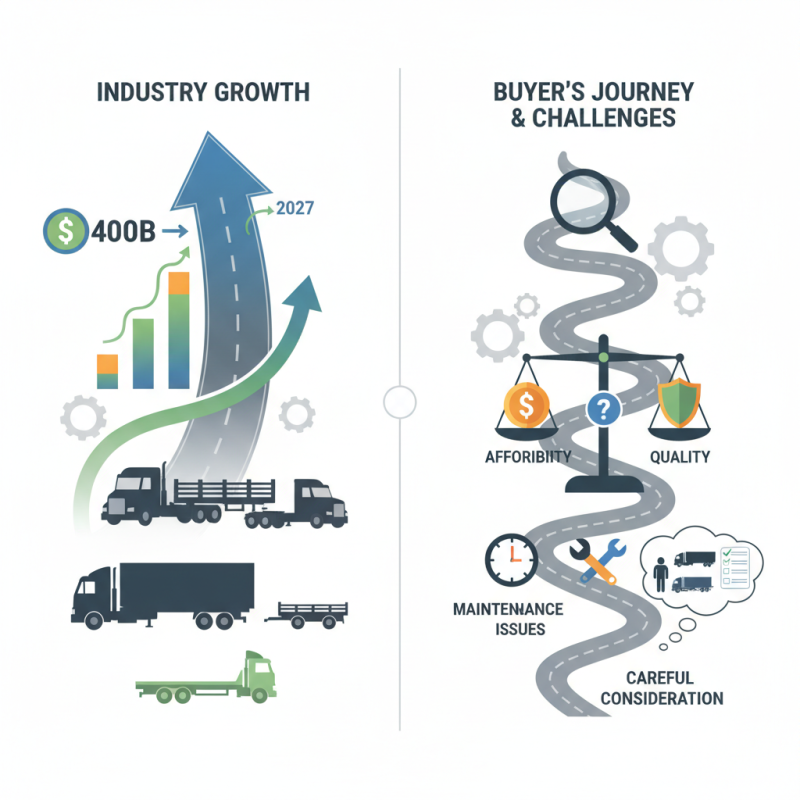
In recent years, the truck and trailer industry has shown significant growth. The market is projected to reach $400 billion by 2027. This expansion creates a thriving environment for buyers. Affordability and reliability are critical factors for consumers.
truck and trailer for sale options are diverse. Buyers can find various models, from heavy-duty trucks to lightweight trailers. The increasing demand for transportation services drives this variety. Quality is essential, but budget constraints often complicate decisions.
Despite the numerous choices available, consumers face challenges. Finding the right balance between cost and quality can be daunting. Additionally, delays in delivery times and maintenance issues can lead to frustration. It’s important for buyers to reflect on their needs carefully. Choosing the right truck and trailer can significantly impact operations.
The Impact of Artificial Intelligence on Workforce Dynamics
The rise of artificial intelligence (AI) is reshaping workforce dynamics. Many jobs are evolving, and some may disappear. Workers must adapt to new technologies. AI can take over repetitive tasks, allowing employees to focus on complex problems. This shift promotes creativity and innovation. Yet, it also raises concerns about job security.
Some workers fear they may not keep up. Skills that were once crucial might become obsolete. Continuous training is essential for staying relevant. Companies need to invest in employee development. However, many lack resources to support this change. There is a risk that those without access to training will be left behind.
The transition to an AI-driven workplace is not without challenges. Balancing efficiency and human touch is crucial. AI can make decisions but lacks emotional intelligence. Jobs in healthcare, education, and social services still rely on human interaction. Hence, companies must consider how to integrate AI without losing the human element. The future workforce needs to find synergy between technology and human skills.
Overview of Artificial Intelligence and its Applications in the Workplace
Artificial Intelligence (AI) is transforming the workplace in various ways. Many organizations are integrating AI tools to improve efficiency. For instance, AI chatbots handle customer inquiries, allowing human workers to focus on complex tasks. This can lead to increased productivity. However, there is a downside to this shift.
The reliance on AI can create challenges. Job displacement is a real concern, as machines take over routine tasks. Employees may feel insecure about their roles. Moreover, data privacy issues arise. AI systems require access to sensitive information, raising concerns about confidentiality. Organizations must address these challenges carefully.
AI can also enhance decision-making. Algorithms analyze vast amounts of data, revealing patterns that may not be obvious to humans. This can lead to better strategic choices. Yet, there is a risk of over-reliance on algorithms. Not all decisions should be left to machines. Human intuition is still valuable in many situations. Balancing technology with human insight will be critical for future workplaces.
Statistics on AI Adoption Rates Across Various Industries
AI adoption is on the rise across numerous industries. Recent statistics reveal that manufacturing leads the way, with about 37% of firms implementing AI solutions. This sector uses AI for predictive maintenance and quality control. However, not all manufacturers are on board. Smaller companies face challenges like cost and complexity.
In healthcare, around 30% of organizations have integrated AI into their operations. AI aids in diagnostics and patient management. Yet, many healthcare providers hesitate. Concerns about data privacy and trust in AI systems linger. The finance industry shows a 25% adoption rate. AI helps with fraud detection and risk assessment. Still, there are worries about biases in algorithms.
Retail also embraces AI, but at a slower pace. Only 20% of retailers utilize these technologies. AI can enhance personalization and inventory management. Despite the potential, many retailers struggle with integrating AI into their existing systems. It's clear that while AI promises efficiency and innovation, various hurdles still exist in its adoption.
The Role of AI in Enhancing Job Performance and Productivity
AI is reshaping various industries by enhancing job performance and productivity. Reports show that organizations using AI tools can experience up to a 40% increase in efficiency. These tools streamline workflows and reduce repetitive tasks. Employees can focus on more creative and strategic initiatives. A study from a leading consulting firm indicated that 72% of businesses feel AI integration improves employee performance.
However, not all companies navigate this shift smoothly. Resistance to technology exists. Employees may fear job loss or change. Effective communication is key to overcoming these hurdles. Companies should provide proper training to ease the transition. Encouraging a culture of learning can make AI adoption smoother.
Here are some tips for successful AI integration:
- Communicate transparently with employees about AI's role.
- Invest in training sessions to highlight benefits.
- Gather employee feedback to address concerns.
When managed well, AI can drive significant gains in productivity, but a thoughtful approach is essential.
This bar chart illustrates the estimated impact of various AI applications on job performance productivity. Each application shows a percentage reflecting how much it can enhance productivity in specific tasks.
Analysis of the Risks of Job Displacement Due to AI Integration
The integration of artificial intelligence (AI) into the workforce raises significant concerns. Many workers fear job displacement as machines take over tasks. This change is already happening in various sectors, such as manufacturing and customer service.
Understanding the risks associated with AI can help workers prepare. Those in routine jobs may find their positions at risk. For instance, automated systems can perform data entry faster and more accurately than humans. This shift may lead to fewer jobs in traditional roles.
Tips: Stay informed about AI trends in your industry. Upskill and learn new technologies. Embrace lifelong learning to enhance your adaptability.
A common issue remains the lack of training opportunities for older workers. They may struggle to compete with younger individuals familiar with new technologies. Investing in education and career development is critical for everyone. This can mitigate the anxiety of job loss as AI continues to evolve.
Conclusion
The article titled "The Impact of Artificial Intelligence on Workforce Dynamics" explores the transformative effects of AI on workplace environments. It begins with an overview of AI technologies and their diverse applications across various industries, noting a steady increase in adoption rates. The discussion highlights how AI enhances job performance and productivity, yet it also presents significant risks of job displacement as automation becomes more prevalent.
To mitigate these risks, the article emphasizes the importance of workforce reskilling strategies in an AI-driven economy. Organizations must invest in training programs to ensure employees can adapt to new technologies and maintain their relevance in the job market. This transition becomes crucial, especially in sectors like logistics, where finding "truck and trailer for sale" requires a workforce that is skilled in integrating AI solutions into everyday operations.